Solutions / AI Agent Security
Enterprise AI agent security
Agentic AI connects models directly to your data and systems. Gain visibility and inline control over the actions your agents take, whether in engineering or general knowledge workflows.
Talk to us about securing AI
Who we work with







Why Harmonic for agents
Secure every tool call, not just the connection
Harmonic Security delivers secure Model Context Protocol connections between models and your internal systems. We monitor agent behaviour, and step in with guardrails when agents attempt to take unauthorized actions or share sensitive data.
01See every agent
Complete visibility into agentic workflows
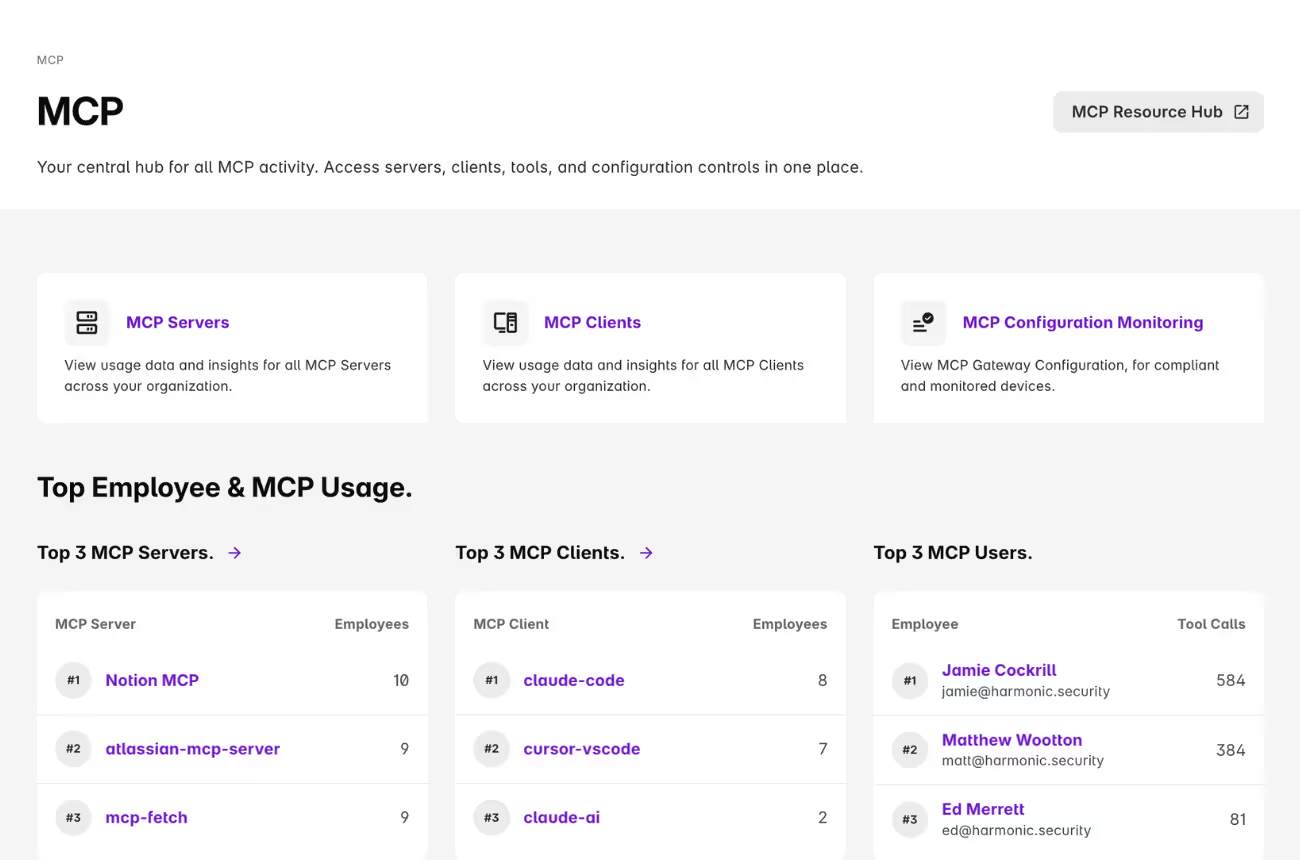
You cannot secure what you cannot see. Harmonic automatically discovers and inventories MCP clients such as Claude Code, Claude Cowork, Codex and Cursor, along with the servers they reach, whether those are official vendor builds or tools your teams built themselves.
Usage analytics show which employees use which clients and servers, and how often. Invocation logging captures a detailed audit record of every interaction for forensics and compliance.
02Enforce policy
Granular policy enforcement and data protection
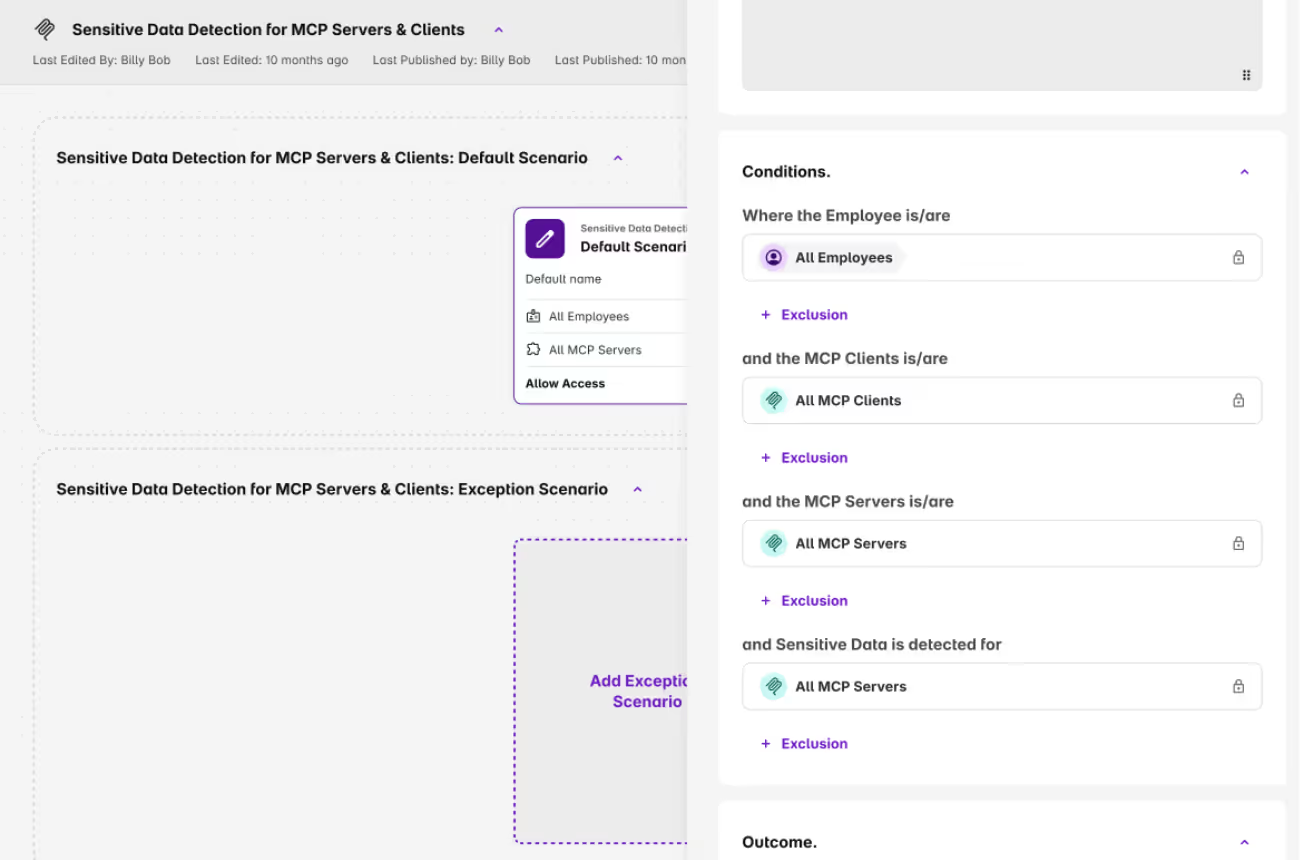
Move beyond coarse blocking. Define and enforce exactly what actions agents can take, and what types of information they can share with each tool.
That control follows the agent wherever it runs. It applies in coding tools like Claude Code, Codex CLI and Cursor, in desktop apps like Claude Cowork and the ChatGPT desktop app, and in web apps like Claude.ai and ChatGPT.
03Coach, don’t block
Intelligent feedback and remediation
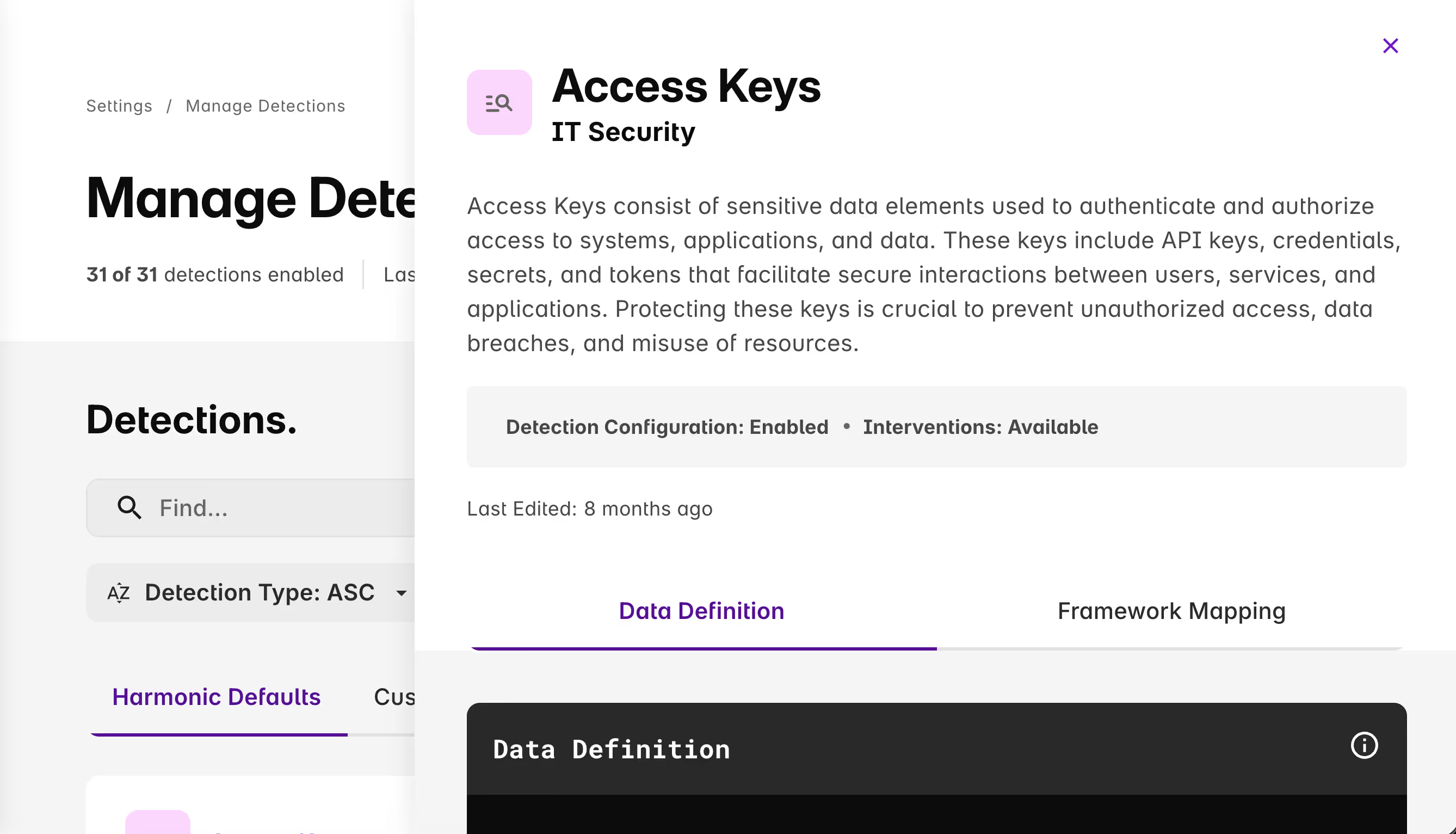
Security controls should not break engineering workflows. When sensitive data is detected, Harmonic Connectors provide contextual, detection-specific feedback directly to the agent.
That feedback coaches the agent on why an action was blocked so it can find a safe alternative path, resolving policy violations without pulling the security team in.
Top resources
Resources for security teams securing agents
Practical guidance on MCP risk, agentic control points and what to govern first.
Frequently asked questions
Quick answers about securing agents
Short, direct answers to what security and IT teams ask before bringing Harmonic in.
What is AI agent security?
AI agent security is the practice of seeing and controlling what AI agents do once they are connected to your data and systems.
Agents like Claude Code, Codex and Cursor do more than answer questions. They read files, call tools and write to systems through the Model Context Protocol (MCP) and cloud connectors. Securing them means knowing which agents and servers are in use, checking what each tool call contains, and stepping in when an action or a piece of data falls outside policy.
How does Harmonic monitor and control agent actions?
Harmonic reads the content of each tool call, checks it against your policy, and records the outcome.
The Local MCP Gateway covers MCP clients, servers and tool calls on employee devices, and Harmonic Connectors cover supported cloud connectors in ChatGPT and Claude. Calls that fit policy pass through untouched. Calls that carry sensitive data or attempt an action you have not allowed are stopped, and the agent is told why. Every invocation is logged, so you have an audit record for investigations and compliance.
Can I allow some agent actions and block others?
Yes. Policies can be set per agent, server, tool and action.
You might let an agent read from a repository while blocking deletes, allow posts to an internal channel while stopping any message that contains credentials, or permit read-only database queries while refusing writes. Engineering keeps its useful automation, and no tool gets more access than it needs.
What happens when an agent tries to send sensitive data to a tool?
Harmonic detects it inline, stops the call, and tells the agent what it found so it can take a safe alternative path.
Detection is semantic, so Harmonic can tell a sample schema or placeholder value apart from live credentials or real customer records. Because the feedback is specific to the detection, the agent can often fix the problem itself, for example by removing an access key and retrying, without anyone raising a ticket with the security team.
Can Harmonic Security detect personal agents like Muse and OpenClaw?
Yes. Harmonic detects personal agents such as Muse and OpenClaw, along with other agents running on employee workstations, through the Harmonic Endpoint Agent.
The Endpoint Agent discovers desktop AI apps, CLI tools, local models, MCP servers and direct calls to inference APIs on macOS, Windows and Linux. It watches AI-related activity only, so it runs alongside your EDR rather than duplicating it.

Get started
Build your AI guardrails for agents
Gain the visibility and control you need to let agents work with your systems safely. Most teams see first insight in about 30 minutes.
What you'll see with Harmonic Security
- A full inventory of your agents and MCP servers, and who is using them.
- Inline guardrails that coach, warn, or block in under 200ms.
- See and control every tool call your agents make.
- Coverage of browser, endpoint and MCP.
- Deployment in minutes via Intune, JAMF, or Kandji.
